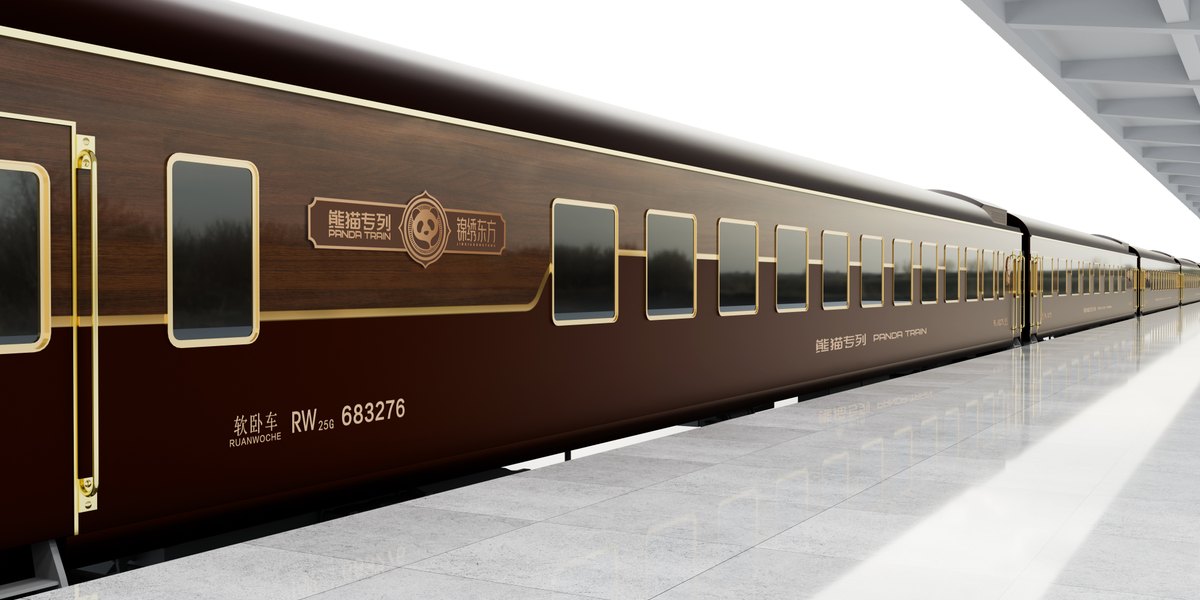
GOLDEN PANDA EXPRESS is conceived as a moving hotel shaped by Bashu heritage and contemporary Eastern design. This article leaves prices, departure dates and daily touring aside. It looks instead at the train concept, and at the way material, colour and spatial rhythm carry a cultural story from Chengdu towards the Silk Road.
At a glance
- GOLDEN PANDA EXPRESS is conceived as a luxury cultural train rooted in Bashu heritage and Eastern hospitality.
- Current planning materials describe 18 carriages, 33 double-occupancy suites and an intimate capacity of approximately 66 guests.
- Shaocheng, Yunque, Jingong and Jinyan shape the welcome, observation, leisure and dining experience.
- The 16-day northern and southern Xinjiang journey for 2027 remains planning information. Routes, stops and timings are subject to final railway authority instructions and the formally published itinerary.
A cultural thread between Bashu and the Silk Road
The design narrative reaches back to Zhang Qian's journey west and the Han-dynasty brocade armguard known as 「五星出东方利中国」 (“Five stars rise in the East to benefit China”), unearthed at the Niya site. Together, they form a creative bridge between Shu brocade, Han-inspired aesthetics and cultural exchange along the Silk Road. Here, that connection is presented as a design idea rather than a claim of direct historical lineage.
The planned interiors bring burgundy, walnut and champagne gold together with references to Shu brocade, lacquer craft, the panda and traditional coffered ceilings. The aim is not to reproduce an ancient palace. These references are reworked through contemporary materials, proportion and light so that culture can become part of daily life on the train.
Shaocheng: the first moment aboard
Shaocheng is the Multifunction Welcome Carriage. In the current design, an octagonal coffered ceiling inspired by traditional zaojing, a golden panda emblem, a sculpted world-map relief and a carved floor medallion create the first visual axis of the journey. The carriage is intended for arrivals, conversation and selected onboard gatherings, not simply as a place to wait after boarding.
Jingong and Jinyan: two ways to dine and gather
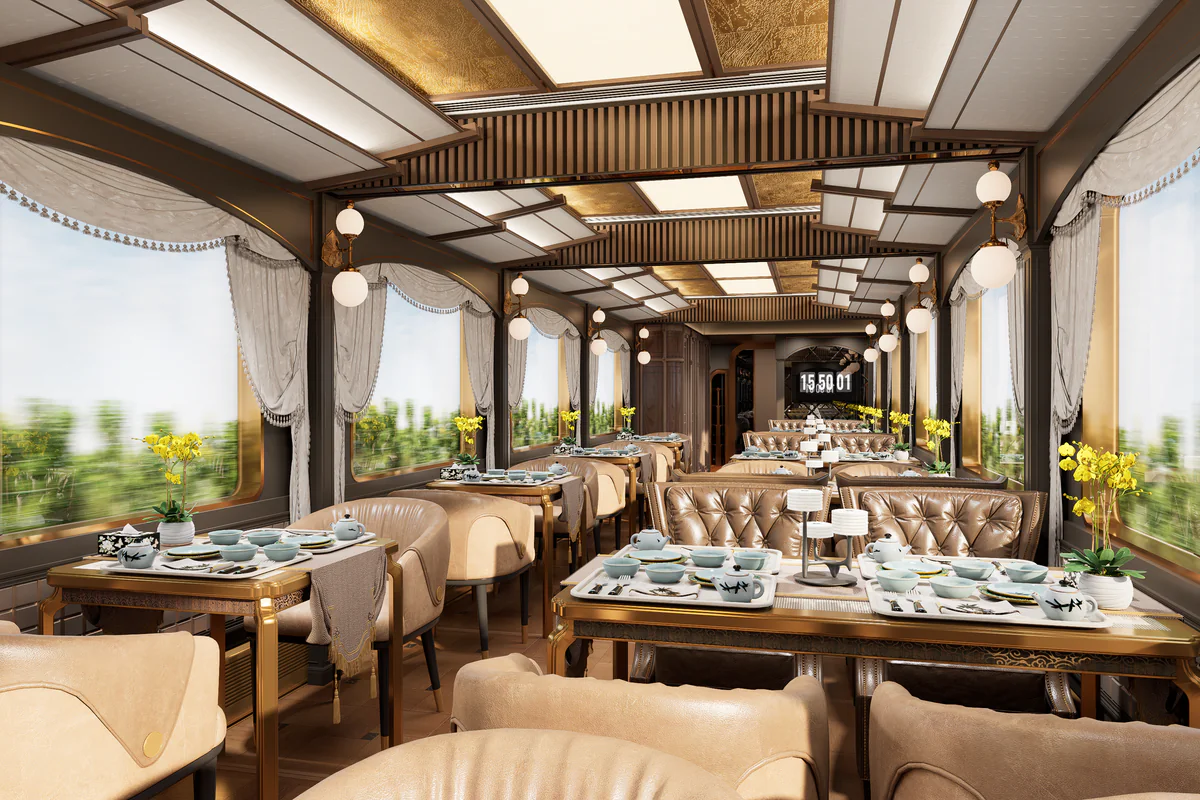
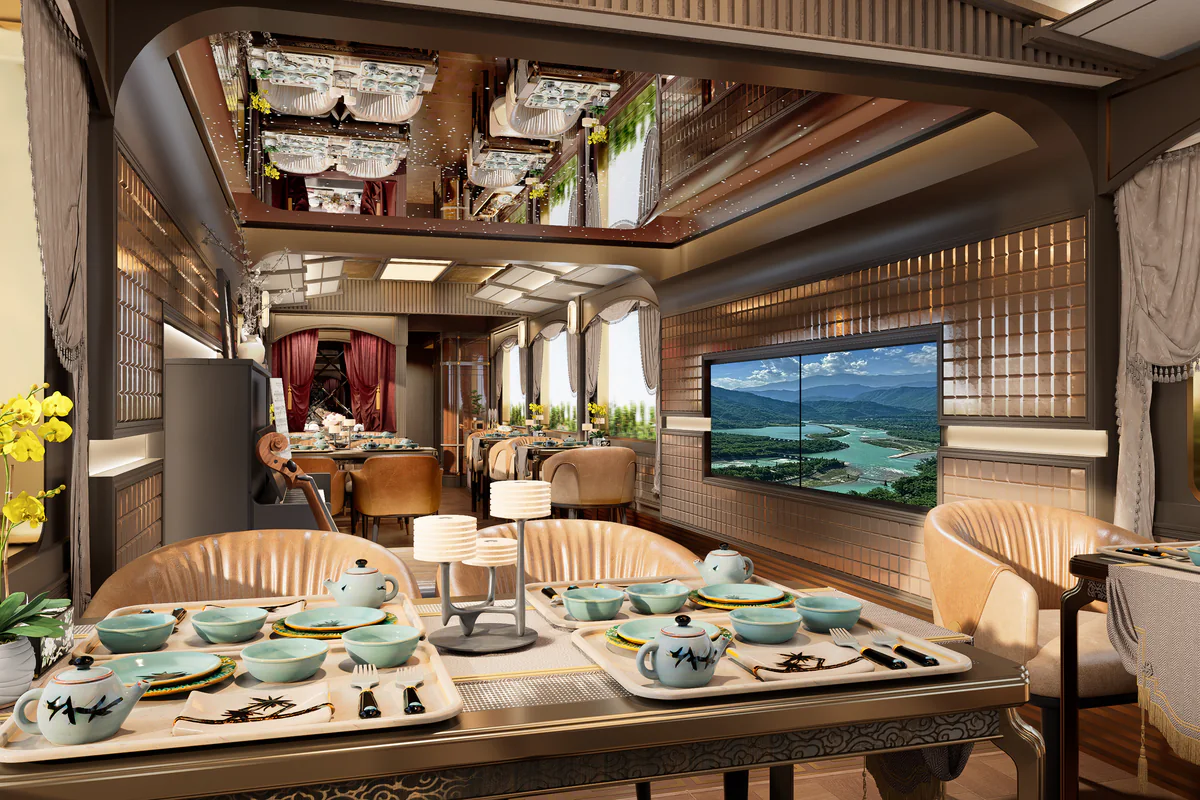
The two themed dining cars separate the formality of a composed dinner from a more relaxed setting for food and conversation. Current planning materials describe Jingong as a 34-seat signature dining carriage framed by dark timber, burgundy and gold details. Jinyan is a 36-seat dining and cultural showcase with a more open layout for shared meals and cultural presentation.
Together, the dining cars provide 70 seats, aligned with the planned guest capacity of approximately 66. The configuration is intended to let guests dine at a shared hour without repeatedly interrupting the pace of observation and rest. Menus, meal formats and beverage service remain subject to the contract and formal pre-departure materials for each departure.
Yunque: a place to watch the journey unfold
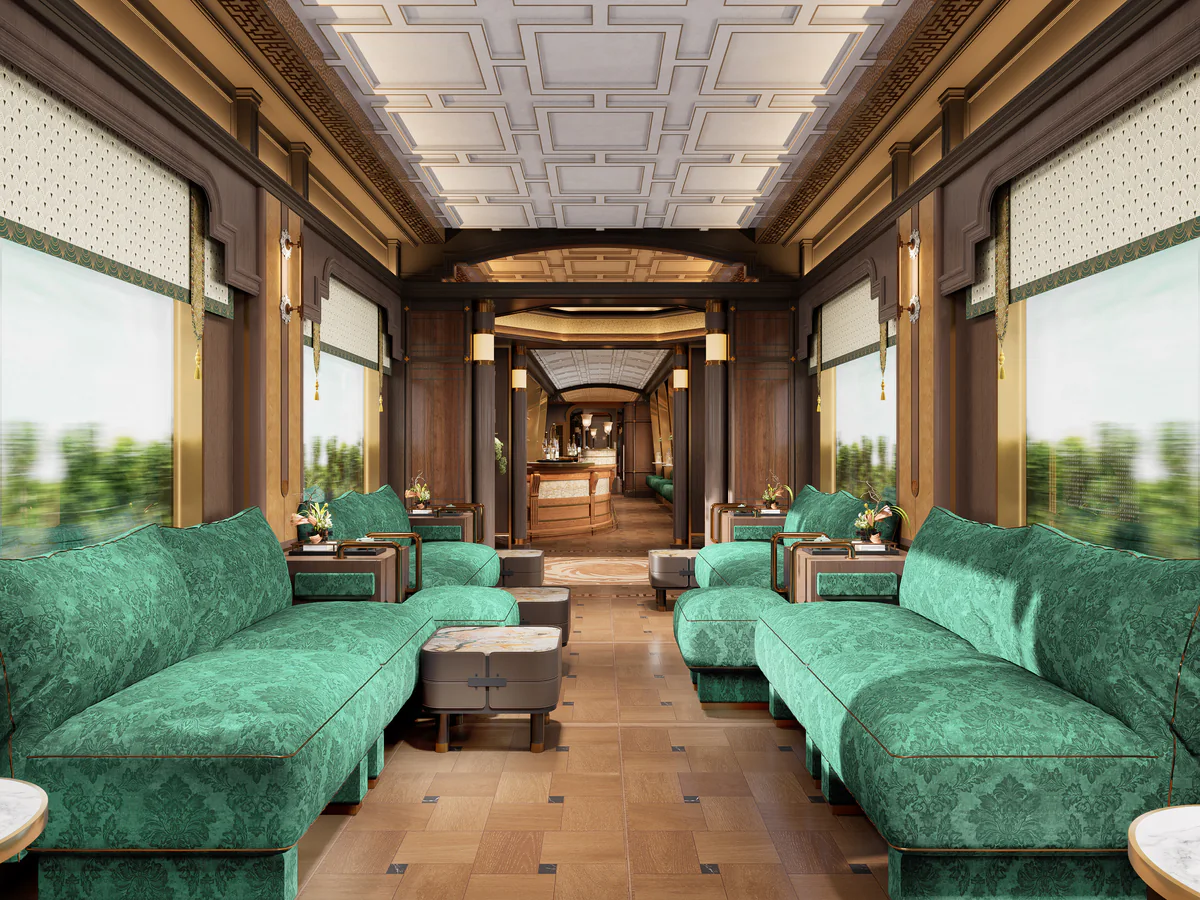
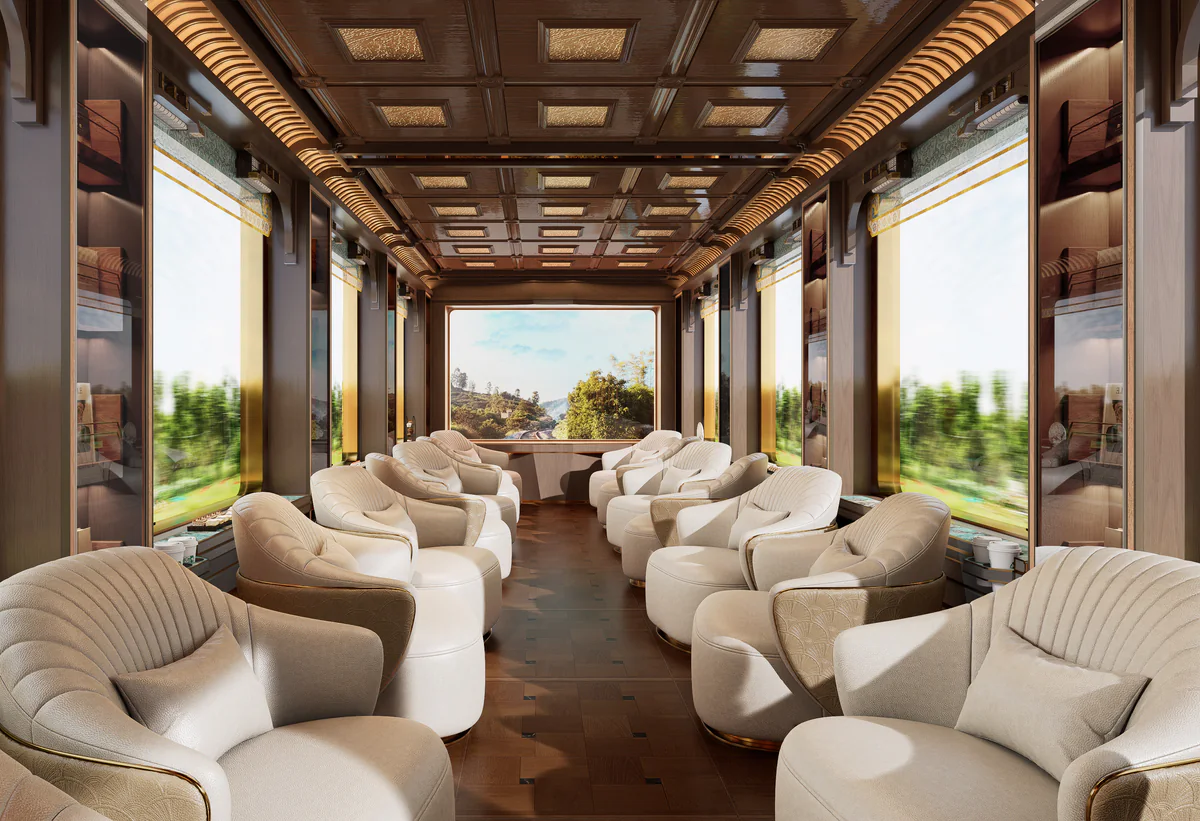
Yunque is the Observation and Leisure Carriage. By day, broad windows bring distant ridges, trees and changing light into the room. Tea, drinks, chess, craft and conversation can share the same setting. After dark, lighting and screen facilities alter the mood, allowing the carriage to move between social time and quieter rest.
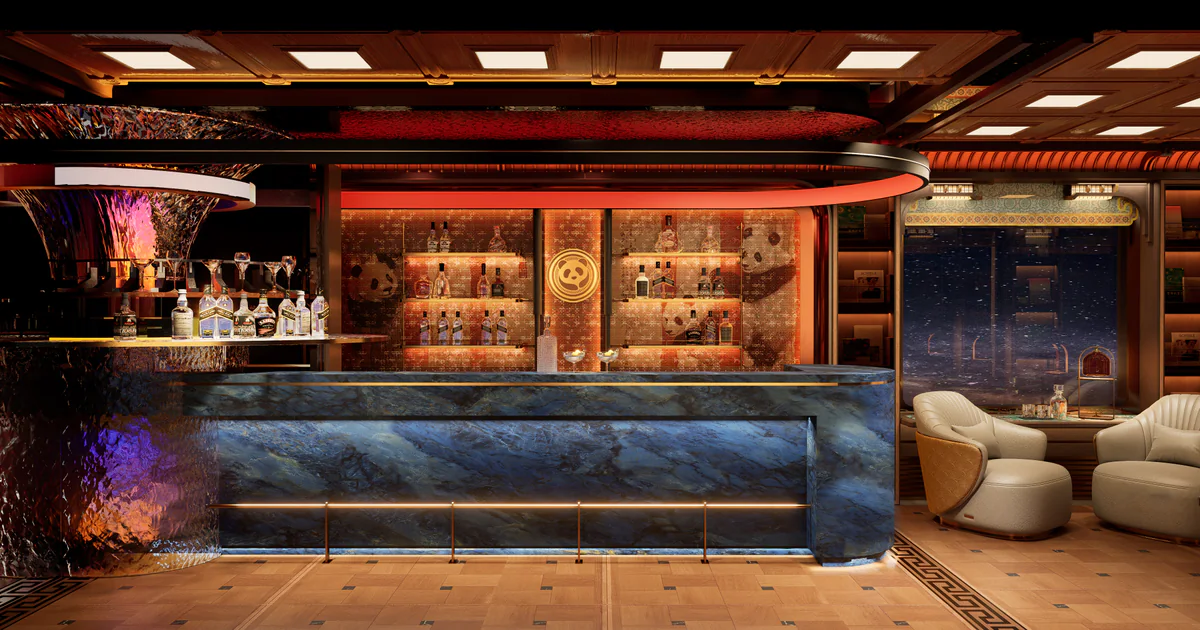
The current concept also includes spa treatments, a cigar area, games and a large screen. The exact experiences, opening hours, charges and service scope must follow the formal information for each departure.
Panda and Han-inspired suites: two expressions of Eastern design
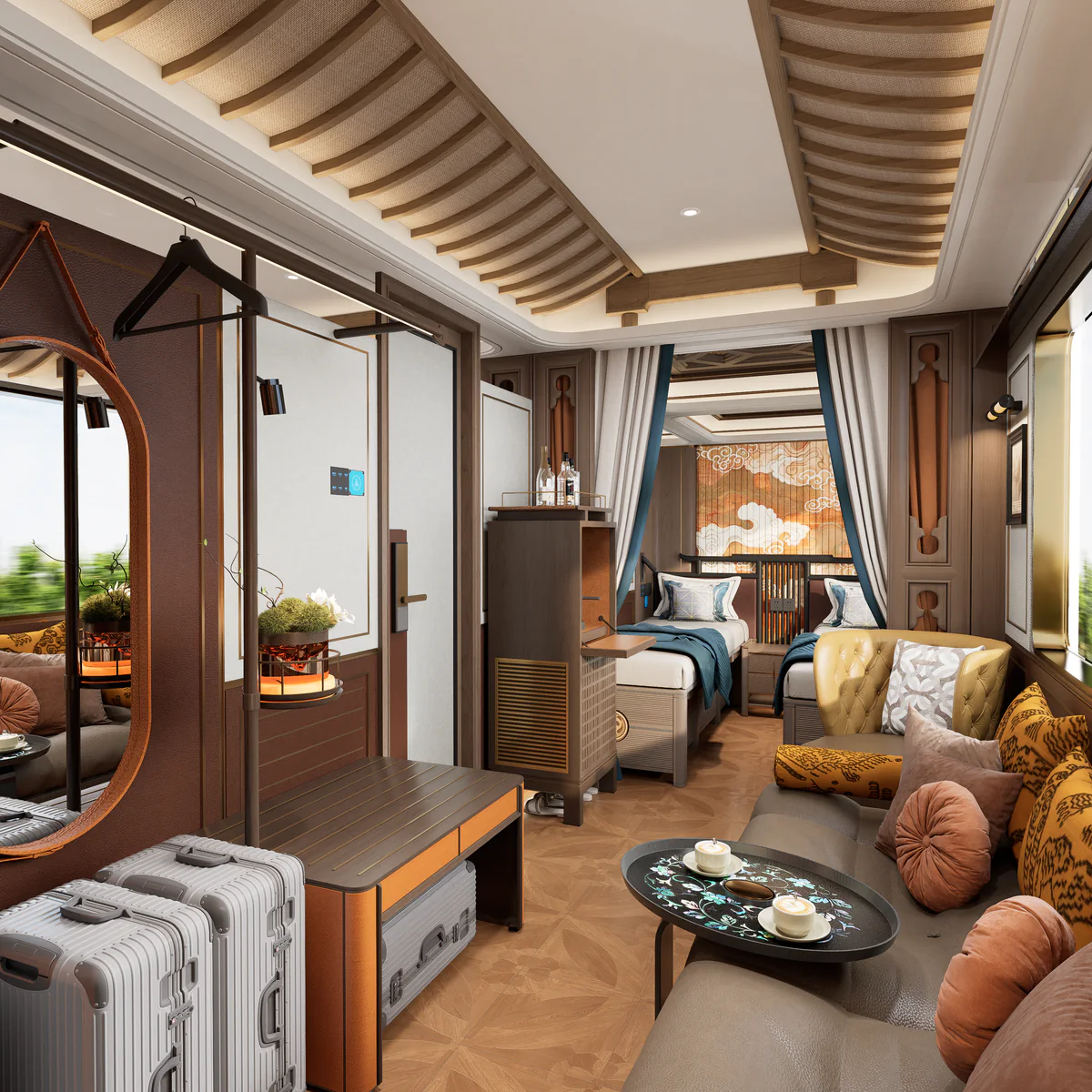
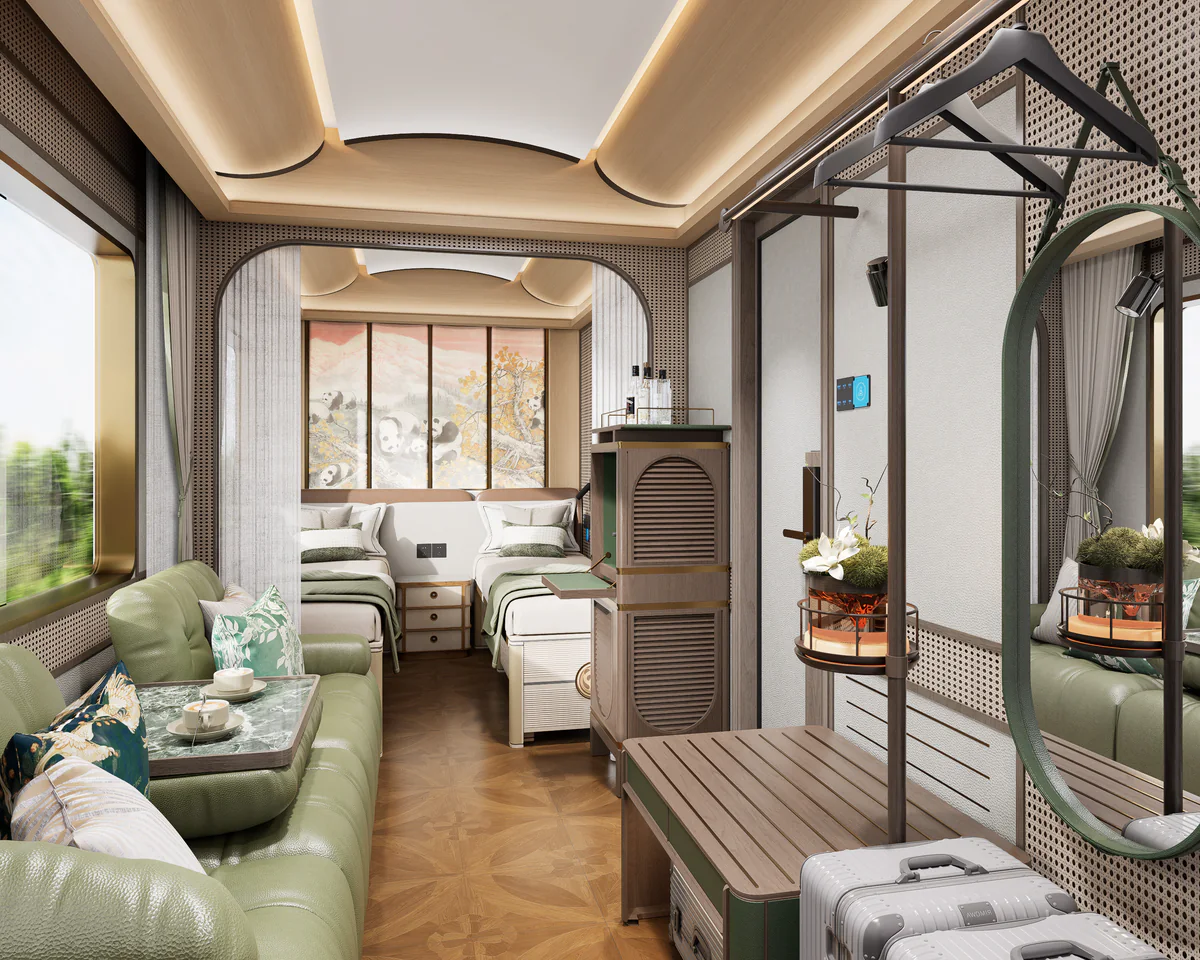
The public product material uses the names Panda Suite and Han-inspired Suite, while the original feature introduces the poetic design ideas Zhuyin and Lingyun. Zhuyin suggests a lighter mood shaped by bamboo, landscape and the panda. Lingyun follows a calmer, more formal Han-inspired language. Final room names remain subject to product confirmation.
Current planning materials place 33 double-occupancy suites across 11 guest carriages, with three suites per car. The original feature describes twin beds that can be separated or joined, a private bathroom with separate wet and dry areas, twin basins, a smart mirror, a window-side daybed, a minibar and a dressing area. Final carriage layout and fittings, suite allocation and included services remain subject to contract and pre-departure confirmation.
| Design idea | Character | Current website name |
|---|---|---|
| Lingyun | Han-inspired order, dark timber and classical pattern | Han-inspired Suite |
| Zhuyin | Panda, bamboo and Bashu landscape expressed with a lighter touch | Panda Suite |
Service with restraint: support along the journey
The service philosophy is to be present when needed. On a long-distance rail journey, that means bringing luggage, dining, daily routines and practical support into one considered rhythm while preserving time for privacy.
Current materials describe an onboard hospitality team, a medical room, licensed medical support, public shower facilities and laundry facilities. These provisions do not amount to hospital-level care, nor should every service be assumed for every departure. Guests with medical histories, dietary restrictions or specific care needs should complete the appropriate consultation and assessment before travel.
Towards the Silk Road: the planned 16-day Xinjiang journey
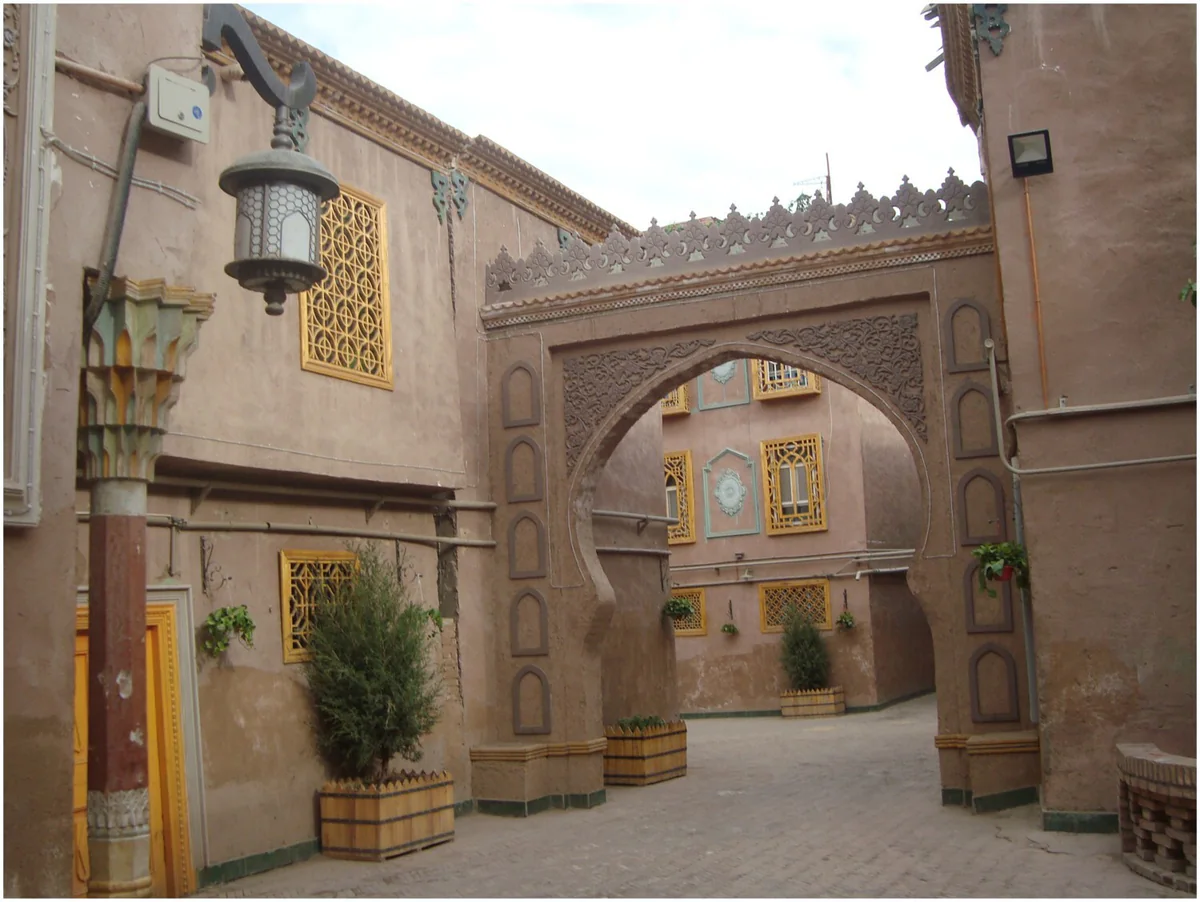
The current 2027 concept begins and ends in Chengdu and links the landscapes of northern Xinjiang, the Ili and Tianshan regions, the historic cities and towns of southern Xinjiang and the Pamir Plateau over 16 days. In this cultural feature, that journey is the direction of the train's story. It is not a promise of departure dates, pricing, availability or fixed stops.
Culture and life aboard GOLDEN PANDA EXPRESS
Is GOLDEN PANDA EXPRESS a regular passenger train?
It is designed as a luxury tourist-train product rather than an ordinary point-to-point rail service, bringing private suites, themed dining cars, shared onboard spaces and destination touring into one journey.
Are the 18 carriages, 33 suites and approximately 66 guests final delivered specifications?
They come from current planning materials. Final carriage layout and fittings, configurations and operating arrangements remain subject to the contract and pre-departure confirmation.
Are Lingyun and Zhuyin the formal suite names?
The original feature uses Lingyun and Zhuyin as poetic design ideas. Current public product material uses Han-inspired Suite and Panda Suite. Final naming remains subject to product confirmation.
Is the 16-day northern and southern Xinjiang journey fully confirmed?
It should not yet be described that way. It remains a planned 2027 journey. Routes, stops, timings and the applicable itinerary version are subject to final railway authority instructions and formal publication.
Continue from the story to the train experience
Explore the train concept through its private suites, themed dining cars, observation spaces and planned 16-day journey. For route details, departure information and travel-advisor contacts, use the relevant official pages.
Source and adaptation: based on the Chinese feature 《熊猫专列·锦绣东方号|载锦雅汉韵,赴千年丝路》 by PANDA ROAM, dated 9 October 2026. Adapted and translated by the GOLDEN PANDA EXPRESS website. Train and interior images are project design visualisations, not photographs of delivered carriages. Destination photography illustrates the local setting.