
Give Sayram Lake time to hold your attention
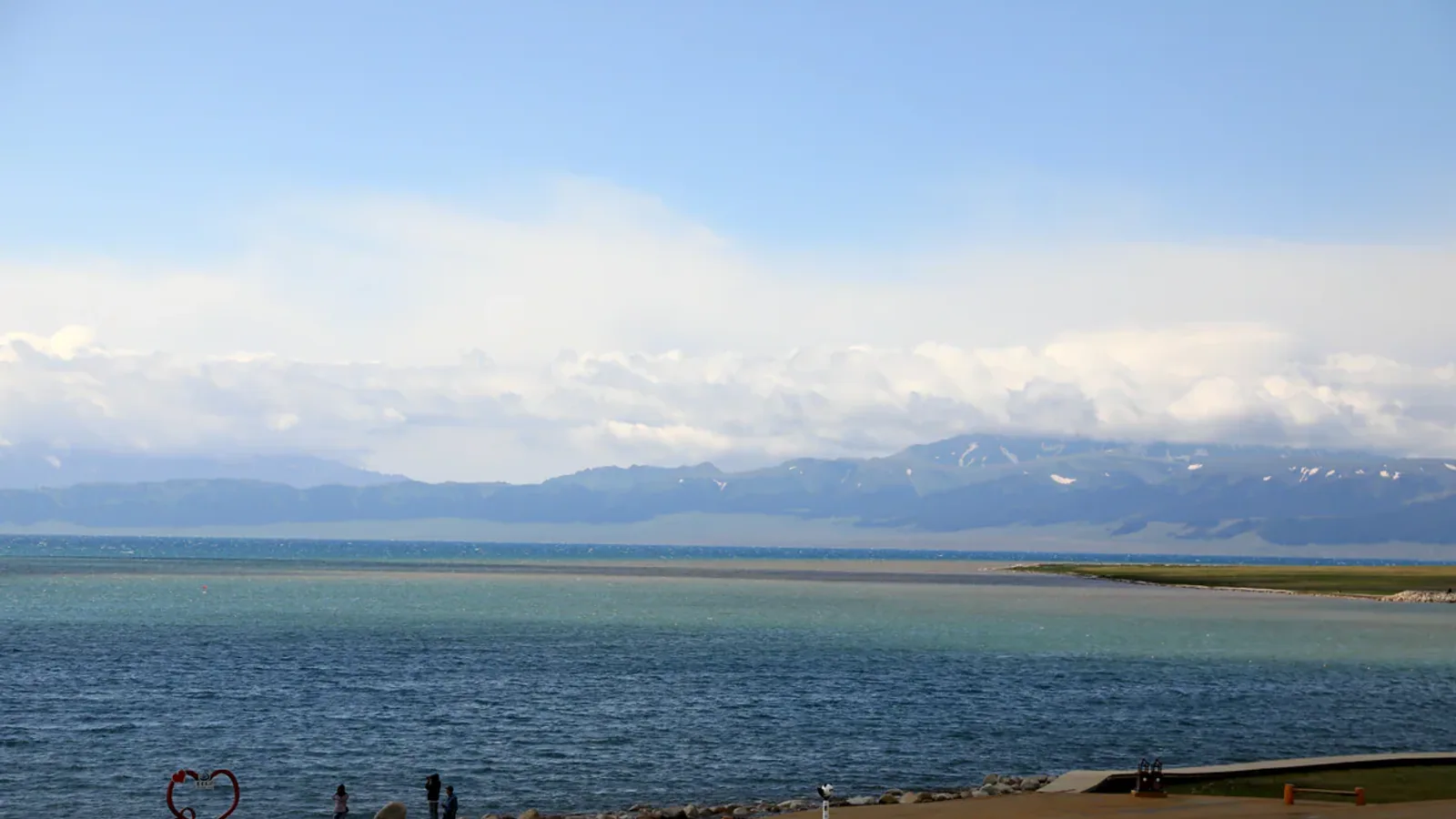
Sayram Lake is a scenic area in Bortala Mongol Autonomous Prefecture, Xinjiang. Its national 5A designation appears in the Ministry of Culture and Tourism's 2021 announcement. On the shore, the attraction is more immediate: open water, a line of mountains and a foreground that changes as you walk.
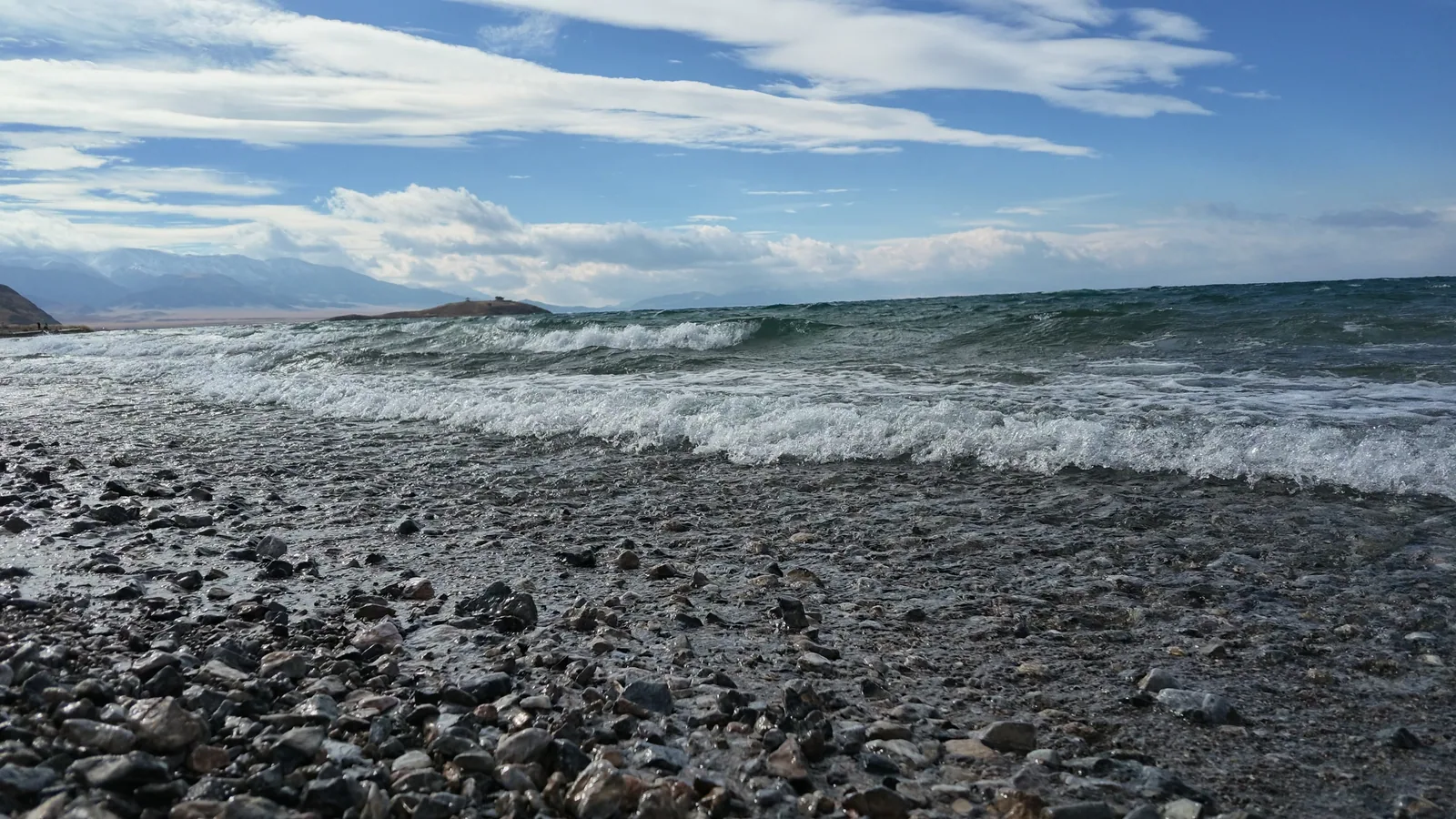
Look from more than one distance. Take in the whole lake first, then the water and stones near your feet. Turn back towards the mountains and cloud shadows. Choosing a few views you really want to remember can make a short stop feel less rushed.
For example, two generations travelling together may enjoy the same stop in different ways. One person can look for a camera angle while another stays within a shorter walking area. Agree this with the guide and follow the site rules, so the group knows when and where to meet.
Separate the rail journey from the lake visit
GOLDEN PANDA EXPRESS is a luxury cultural train with a proposed 16-day North and South Xinjiang journey for 2027. The plan places Sayram Lake within the Ili and Tianshan part of the trip. Rail travel links journey stages; getting to the lake and visiting the scenic area also involves road transport. A lake on an itinerary does not mean the train stops at its shore or that the water is visible from a suite.
Read the evening before, the day itself and the night after as one sequence. Where do you meet? What should you carry? Do you return to the train or check into a hotel? These details tell you whether the day allows a gentle start or needs an early departure and several transfers.
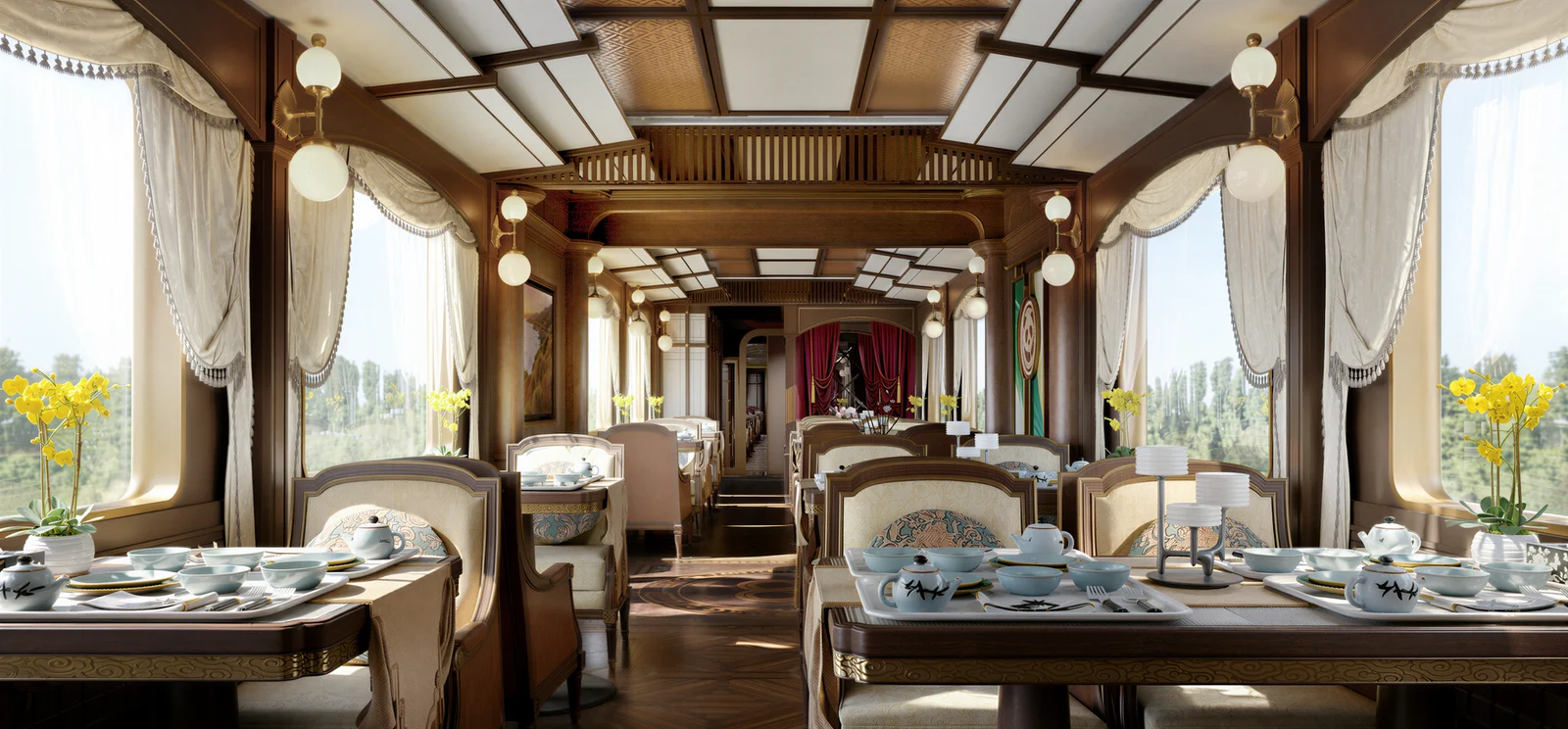
Suppose you want a relaxed lunch after taking photographs. Ask where the meal is served and when the group meets again. The Jingong dining-car rendering shows the setting for meals on board. It does not establish where lunch will be served on the Sayram Lake day.
Leave space to spend time by the water
A simple plan is enough: pause for the wide view, walk towards a detail you like, then leave time to sit. This is a planning suggestion; the guide and site arrangements determine actual stops and walking areas. A day often feels calmer when every minute has not been assigned to another photograph.
Try a wide frame first, then a closer view with the shore and mountains at different distances. Take a photograph of your companions when they are absorbed in the scene. Light and weather change the colour of the water. The blue you see in a brochure is one moment, not a test your visit must pass.
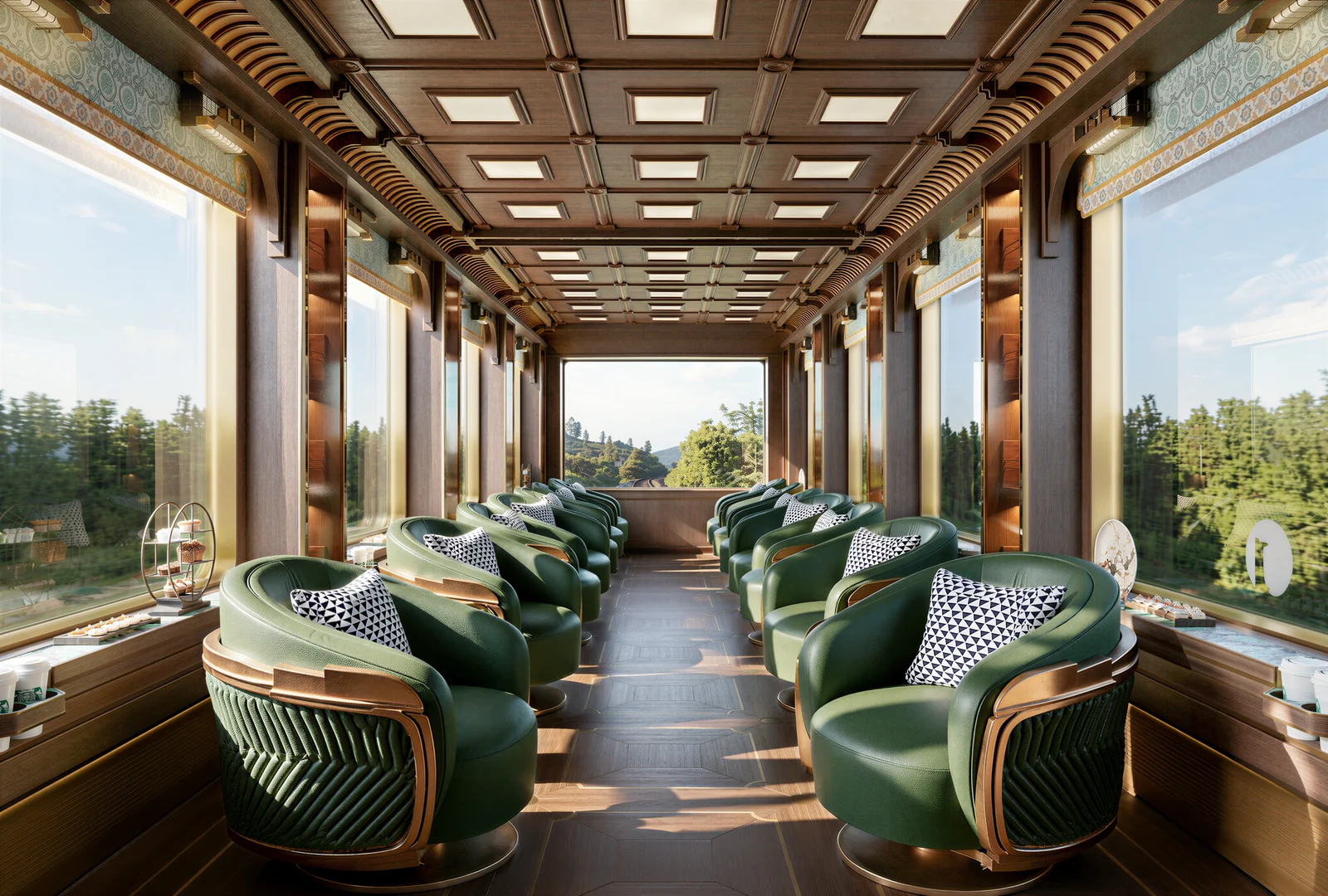
Yunque is the train's planned rear observation lounge. The public-space guide shows how seats relate to its broad windows. In this daytime design, the seating keeps the view in sight along the carriage. It offers a way to imagine a slower moment on board; the scenery beyond the windows is part of the rendering.
Match the day to the people travelling
The same lakeshore can call for quite different plans. A photographer may want time in one place. A couple may prefer a quiet walk. A family may need clear meeting points and easy breaks. Raising these needs before departure gives an adviser something useful to work with.
| Travellers | Make time for | Ask your adviser |
|---|---|---|
| Couples or friends | A shared stop, photographs and a quiet break | Walking distances and clear meeting points |
| Photographers | A small number of views and charged batteries | The actual stops and time available |
| Families across generations | Places to rest and fewer items to move | Transfers, toilets and that night's accommodation |
| First-time Xinjiang visitors | Understanding the pace of the whole day | How busy the days on either side will be |
Use the table to describe preferences. It does not mean a special arrangement is included in the fare. If you hope to spend time apart from the group, ask at the enquiry stage. Shared visits still depend on agreed meeting times and local management.
A place to settle after a day outside
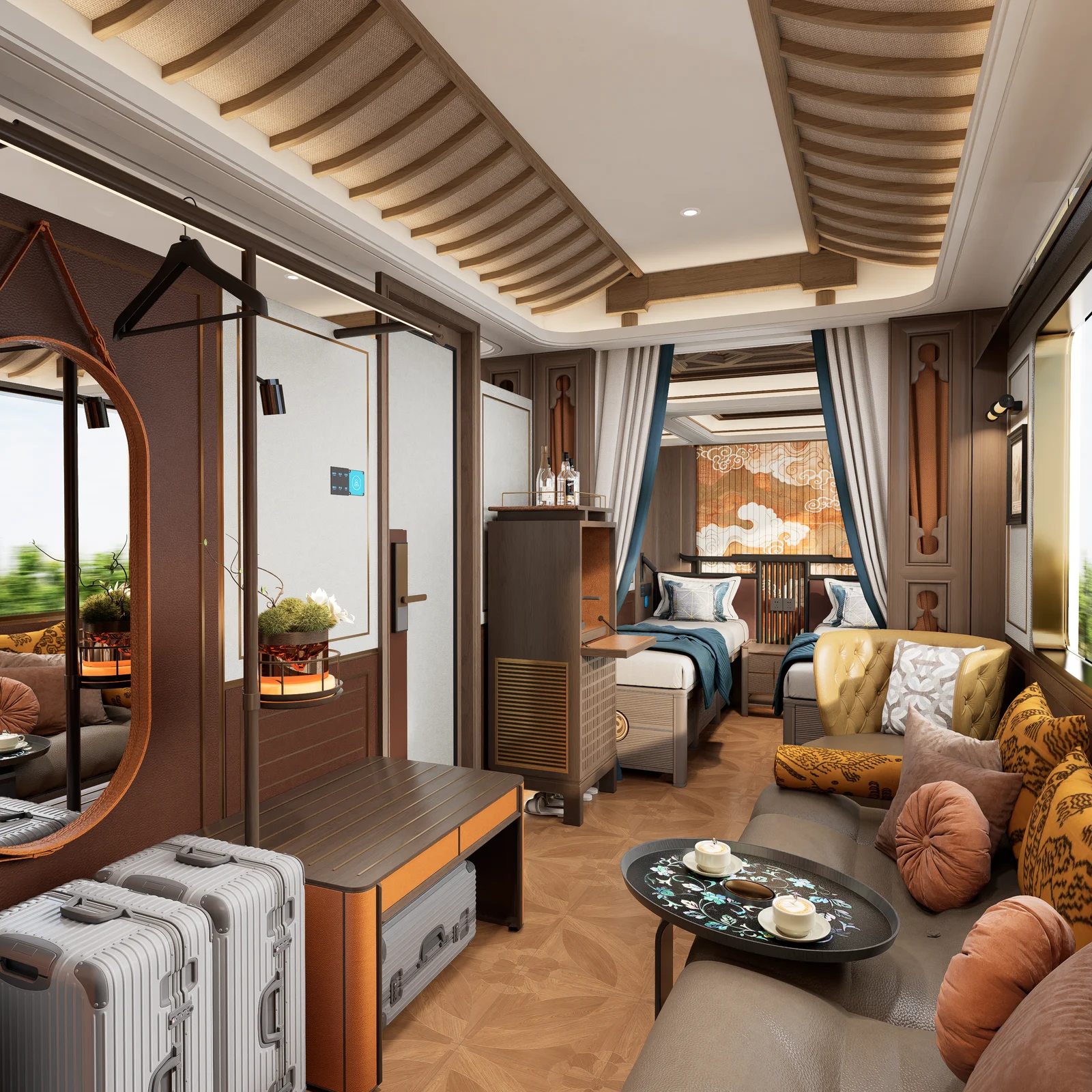
After a full day out, comfort often comes down to small things: putting away a camera, taking off a jacket, sending photographs home and sitting with a glass of water. This Han-inspired suite view shows the relation between the window seat, the table and the entrance. Look for where each of those ordinary actions might happen.
The suite guide lists twin accommodation of about 13.8 square metres, beds that can be joined or separated, and a private bathroom with separate wet and dry areas. Start with your sleeping habits and the person sharing your room. Then consider the theme. A photogenic room still needs to suit your storage, sleep and care needs.
If your Sayram Lake day ends at a hotel, check that hotel's arrangements for the night. A rail holiday brings life on board and time on land together. It does not mean every night in Xinjiang is spent on the train.
Let the conversation continue after the lake
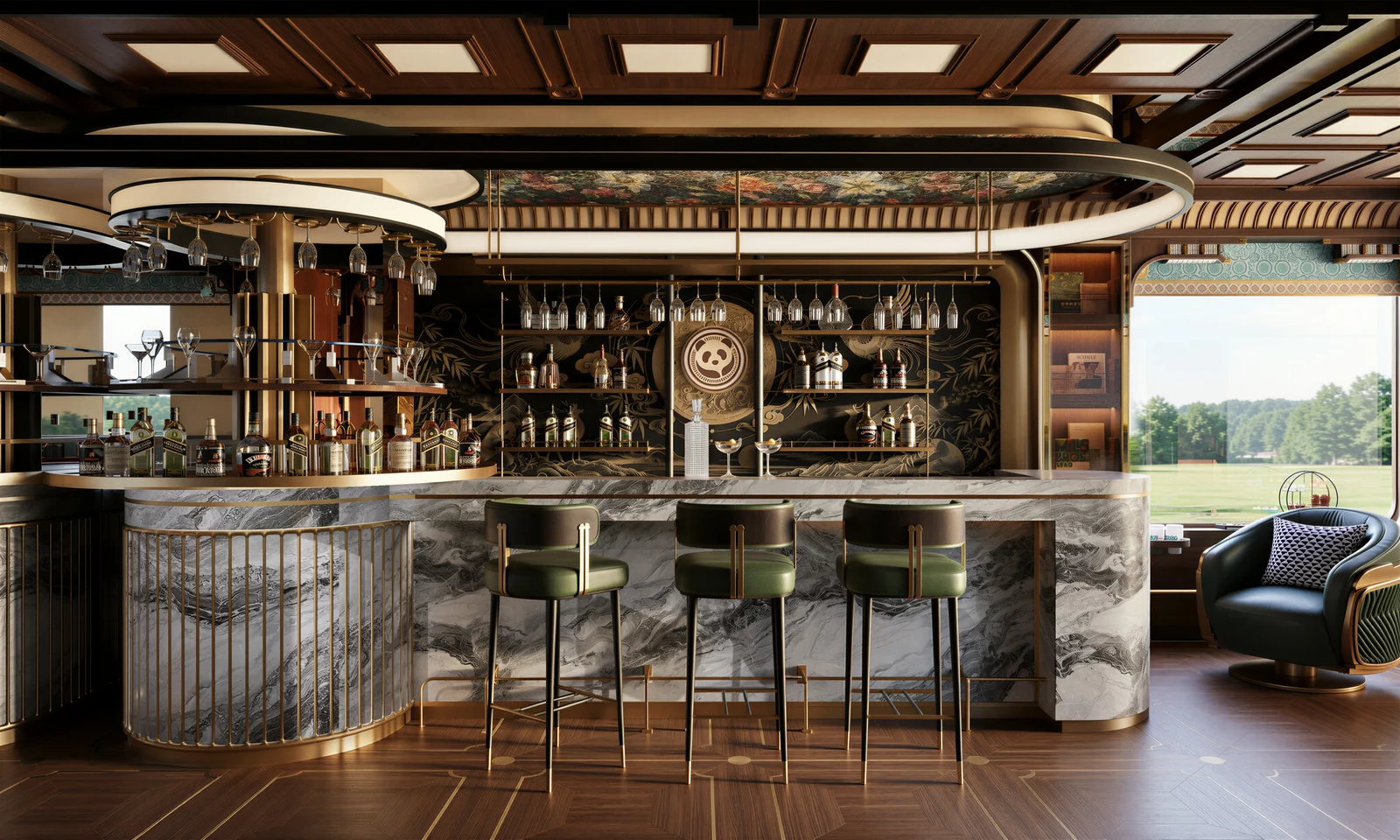
Some of the moments you remember happen after a visit. Sharing photographs and talking about the mountains can give the day a satisfying close. The Yunque bar design brings seating, display areas and conversation into one space. It is a useful setting in which to imagine that quieter part of the journey.
The Jingong and Jinyan dining guide adds the meal setting to this picture. Look beyond the place settings. Will the group have time to settle? Can companions sit together? Have dietary needs been passed on? Menus, seating and opening times need to match the actual departure.
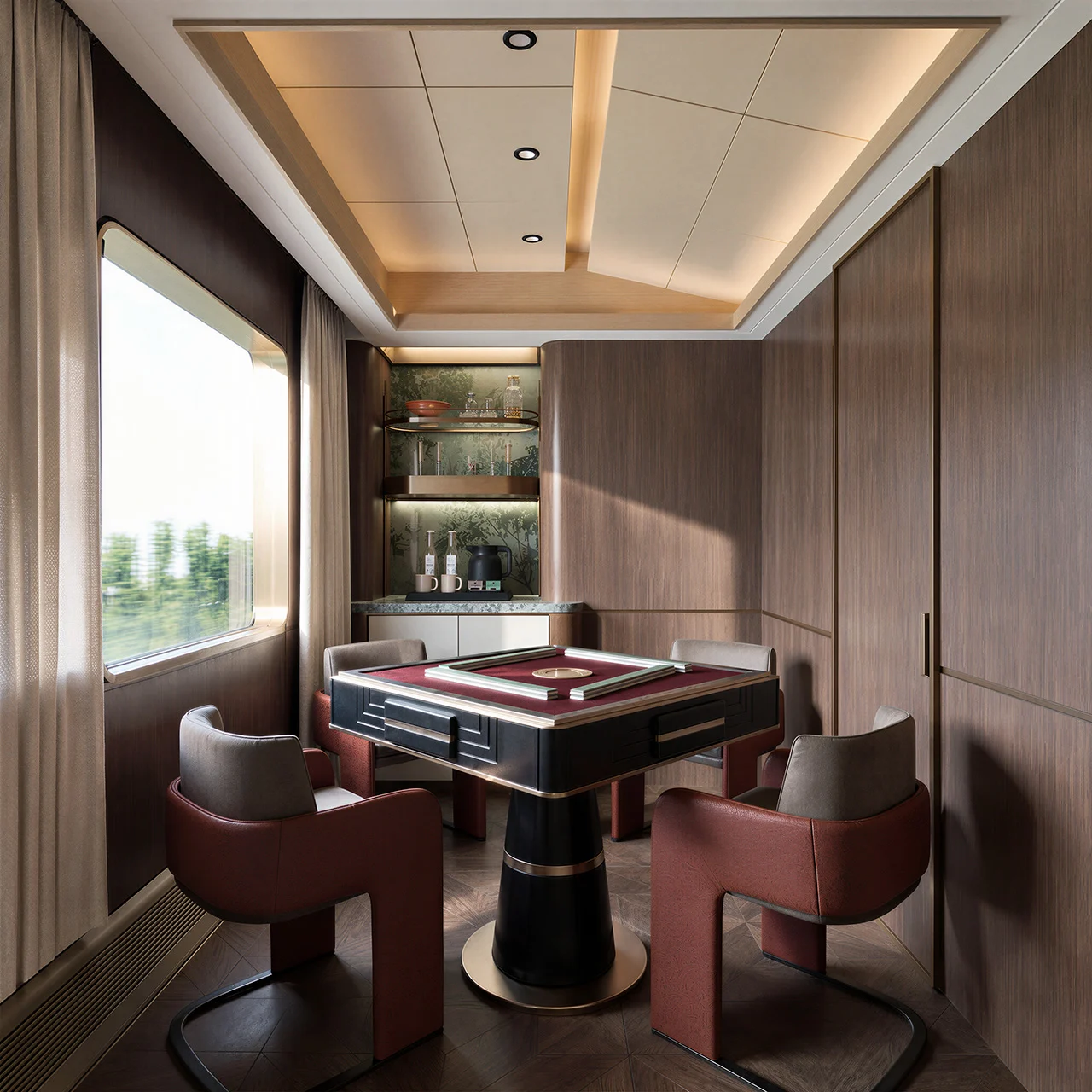
For example, a small group may prefer a casual game to another organised activity. The games-room design provides a setting for that kind of time together. Access, use and any charges follow the service terms; a rendering does not establish unlimited or private use.
Pack for the day you will actually have
A day bag can be simple. Keep your camera and charging kit together, add clothes and everyday items for the expected weather, and carry documents and personal essentials. Check the forecast close to departure. You should not need to move a large suitcase just to visit one scenic area.
- Save meeting times, transfer points and contact details where you can read them offline.
- Charge your phone or camera the night before, and follow the railway rules for power banks.
- Explain your preferred walking pace and any help you need in advance.
- Read the final departure notice for the lake visit, meal location and overnight stay.
Good service makes the next step clear. An agreed meeting point, a sensible break and a reachable member of staff are more useful than a broad promise that the whole trip will be effortless.
Three questions about the lake and the train
Does the train go straight to the lakeshore?
The material reviewed does not establish this. The planned lake visit involves road transfers. Check the final instructions for your departure.
Is the same visit included on every departure?
Do not assume so. The route page presents combinations by departure date and travel-document category. Confirm the applicable plan, train schedules and service plans and sequence.
Where should I compare the onboard spaces?
Read the interior and suite guide, then compare it with the full proposed route. Give your adviser your dates, party size, bed preferences and the places you most want to see.
Make the lake part of a well-paced journey
Start with the proposed route, then ask an adviser about your dates, transfers and overnight arrangements.
Sources and editorial approach: Written with AI assistance using the project's interior images and the public sources linked in the text. Sources checked on 15 October 2026. The editorial comments describe what the designs show and suggest ways to plan a trip; they are not an onboard review. Design images show planned spaces. Check the official documents for train dates, final fittings and included services.